


How to Choose Tempered Glass Shower Panels and Shower Door Glass
Ordering the wrong shower glass can lead to poor fit, hardware conflicts, and costly replacements. Those problems grow across a bulk order. This guide helps you define the layout, drawings, finish, and inspection terms before production, so you can buy with a clear plan.
Choose tempered glass shower panels by matching the layout, panel size, glass thickness, support system, and required safety documentation. Confirm holes, cutouts, edges, and surface finish on approved drawings before processing. For bulk orders, also agree on sample approval, inspection criteria, packing, and delivery terms with your supplier.

1. Which Glass Shower Layout Fits Your Project?
Start with how people will enter and use the bathroom. A walk-in shower often uses a stationary panel to limit spray while leaving an open entrance. A hinged door needs space to swing. A sliding design needs tracks, rollers, and enough overlap. These choices shape both the glass dimensions and the hardware schedule.
For importers and enclosure manufacturers, a layout drawing gives the quotation a practical basis. Show walls, floor slope, entry width, and the position of the water outlet. A fixed shower screen may suit an open plan, while a more enclosed layout may help contain water in a smaller room. Check splash control alongside access and cleaning.
Use the layout comparison below to organize your first discussion. Each option still needs a confirmed support design and site measurements.
| Layout | Typical purpose | Details to resolve |
|---|---|---|
| Single fixed panel | Open entry and spray control | Panel width, support, and splash path |
| Hinged door with side panel | Defined entrance | Swing clearance and hinge positions |
| Sliding assembly | Entry where swing space is limited | Tracks, overlap, and roller holes |
| Corner arrangement | Two adjoining glazed sides | Angles, joints, and corner hardware |
| Bath screen | Spray control above a bathtub | Bath rim, seals, and fixing method |
2. Why Specify Tempered Glass for Shower Screens?
Tempering heats prepared glass and then cools it rapidly to create stresses within the material. This changes its strength and breakage behavior. Buyers should define the required performance and supporting documents at the start of a project. A description such as “high-quality tempered glass” becomes more useful when paired with clear acceptance criteria.
For projects in the United States, the federal architectural glazing safety standard includes shower doors and enclosures, as well as bathtub doors and enclosures. Confirm the applicable requirements for your destination and the evidence needed for the actual glass being ordered. The published standard provides a starting reference.
If your brief asks for SGCC certification, request current documentation covering the relevant product and manufacturing location. Match the stated scope to your order. Safety and durability depend on the specified glass, processing quality, hardware, and finished assembly working together.
3. How Do You Choose Glass Thickness and Panel Size?
Thickness should follow the panel dimensions, support arrangement, and hardware limits. A narrow door supported by hinges presents different demands from a wide fixed screen. Larger pieces also weigh more, affecting handling and the loads carried by fittings. Ask the system designer or hardware supplier to confirm the permitted glass range before approving a drawing.
You may see 6 mm, 8 mm, 10 mm, and 12 mm options in purchasing briefs. Treat these as dimensions to evaluate against the selected system. For each item, state the finished width, height, nominal thickness, and agreed tolerances. A fixed glass shower panel should also have a clear record of its supported and exposed edges.
For example, an illustrative hotel order might include one door and one side piece per bathroom. Similar overall dimensions can hide different hinge cutouts or handed arrangements. Separate those parts in the schedule, assign a unique drawing number to each, and check the quantities against the room plan. This makes repeat ordering easier.
4. Should You Choose Frameless or Framed Glass?
A frameless shower screen creates an open look with less visible metal around its edges. Its design needs careful coordination between glass dimensions, clamps, hinges, and any support bar. When ordering a frameless fixed glass shower panel, confirm where the fittings sit and how the surrounding structure will carry the loads.
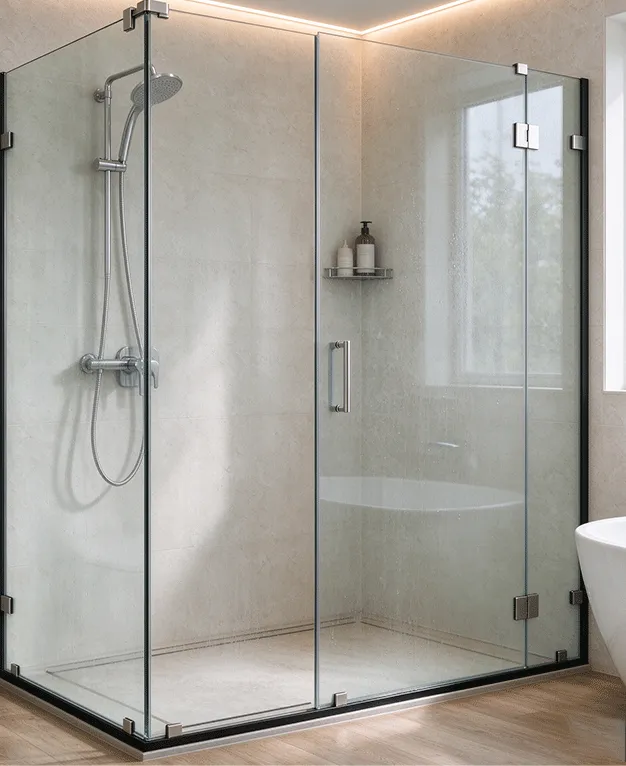
A framed fixed arrangement uses surrounding profiles as part of the system. That changes the glass size, edge allowances, and assembly details. A matte black frame can create a strong outline, while a lighter finish may blend with nearby fittings. Both approaches need a complete design that accounts for seals and water management.
For distributors offering framed and frameless ranges, keep separate drawings and part codes. A visually similar glass shower door can require different processing in another hardware system. Before comparing prices, confirm whether the quotation covers glass only, glass and hardware, or a complete enclosure assembly.
5. Which Glass Finish Suits the Bathroom Design?
Clear glass keeps sightlines open and allows tile details to remain visible. Low-iron options can be considered where a reduced green tone matters to the design. Textured or acid-etched finishes may help soften views. Review the actual appearance, surface orientation, and processing suitability of the proposed material before selecting privacy glass.
Leader Glass supplies clear, low-iron, tinted, and decorative glass within its broader range. For a custom glass request, ask us to review the intended finish alongside the drawing and application. Availability and suitable processing need confirmation for the particular order. A sample helps the buyer, designer, and fabricator work from the same visual reference.
If your design uses matte black fittings or a grid style shower screen, define which details belong to the hardware and which belong to the glass treatment. A black finish, printed line, and applied profile each need their own description. Also specify any glass coating separately, including its appearance and care instructions.
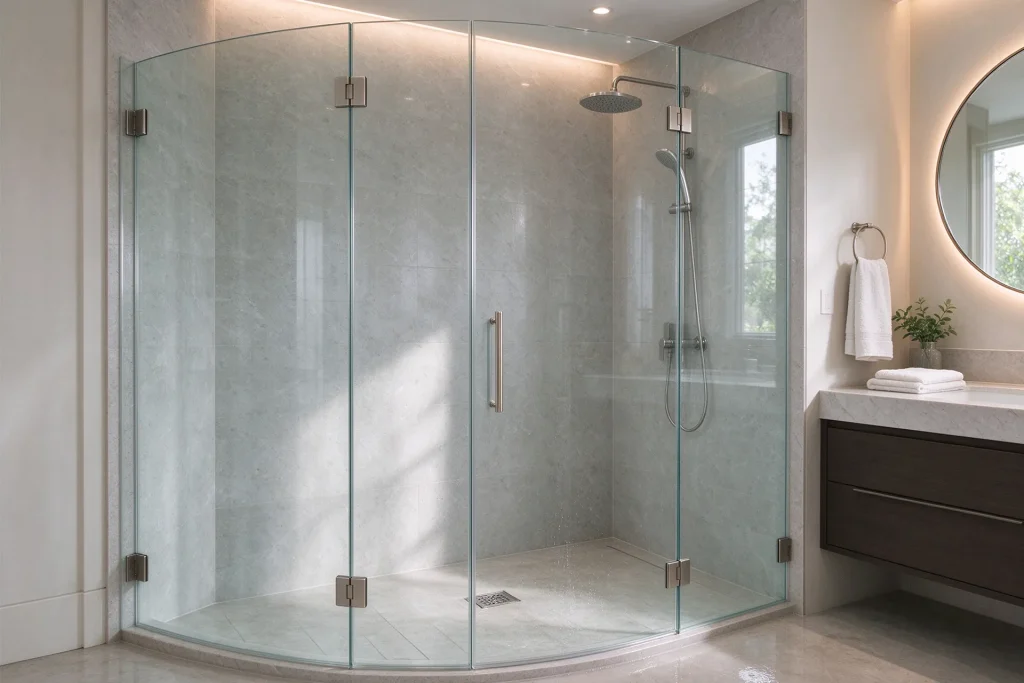
6. What Drawings Are Needed for Custom Shower Glass?
An approved drawing should tell the processor exactly what to make. Include finished dimensions, thickness, corner details, edge finish, and all holes or cutouts. Mark the viewing direction and any inside-facing surface. For a hinged screen, confirm the hinge model and its required machining template before the drawing reaches production.
Cutting, drilling, and edge work must be completed before tempering. Changes discovered after that stage can require a new piece. Give every revision a clear identifier, and ensure the purchase order points to the approved version. This is especially important when left-hand and right-hand parts look similar on a packing list.
Use this checklist when preparing a shower screen panel for quotation.
| Drawing item | Information to provide |
| Part identity | Item code, drawing number, and revision |
| Overall size | Finished width and height with units |
| Material | Glass type, thickness, and finish |
| Edges | Required treatment and corner details |
| Machining | Hole diameters, locations, and cutout shapes |
| Orientation | Inside face, handing, and coating side |
| Hardware reference | Agreed hinge or clamp template |
| Acceptance | Dimensional and visual inspection terms |
7. How Can Buyers Check Shower Panels Before Shipment?
Start with an approved sample or first article, then agree on the checks for the batch. Review dimensions, thickness, holes, cutouts, and glass edges against the drawing. Inspect visible surfaces under agreed lighting and viewing conditions. Clear criteria help both parties assess scratches, chips, and other appearance concerns consistently.
For repeat supply, keep the sample approval record with the order documents. Ask how parts will be identified and how inspection records relate to the shipment. If a trial assembly is required, define the hardware and acceptance method beforehand. This can help reveal a fit issue before a large order enters regular production.
Request evidence relevant to your destination and specification. Product markings, test records, and packing photographs serve different purposes. Agree on what you need and when it will be supplied. A glass professional reviewing the finished system should also consider the mounting surfaces, support details, and applicable project requirements.
8. What Affects Bulk Shower Glass Pricing and Delivery?
Pricing depends on the material, thickness, dimensions, processing, finish, order mix, and packing requirements. Many small batches with different cutouts can need more coordination than a repeated design. Compare quotations using the same drawing revision, quantities, inspection terms, and trade terms so the commercial differences are clear.
Packing should reflect the route and unloading plan. Discuss separation between pieces, edge protection, crate identification, and access at the destination. For a mixed shipment, link the crate list to item codes and quantities. Clear labels can help your warehouse receive parts and distribute them to installers or production teams.
Delivery planning should include drawing approval, material confirmation, production, inspection, dispatch, and transit. Record who handles freight, insurance, and unloading under the agreed terms. For repeat orders, share your forecast and required arrival windows early so the supplier can review a practical supply plan.
9. How Can Leader Glass Support Your Sourcing Plan?
We are Leader Glass, a Qingdao-based manufacturer and exporter with over 15 years of export experience. Our range includes float glass, silver and aluminium mirrors, decorative glass, and processed glass. We work with overseas importers, wholesalers, distributors, manufacturers, contractors, and project buyers seeking specification-based supply and export support.
For a tempered glass shower panel inquiry, send us the intended layout, drawings, quantities, and destination. Tell us whether you need glass components for your own assembly or wish to discuss a broader supply requirement. This gives our team a basis to review processing details and confirm the proposed scope, available options, and quotation terms.
You can begin with our tempered glass range. For material discussions, include the required appearance and any reference sample. Send your drawings and quantity schedule to Leader Glass to request a specification-based quotation. Add the following details to help us review your needs.
- Finished dimensions and thickness for each item.
- Glass finish, edge treatment, holes, and cutouts.
- Required standards, markings, and supporting documents.
- Order quantity, repeat demand, and packing preferences.
- Destination port, requested trade terms, and target delivery window.
For more detailed product information, please contact us.
FAQ
What is the difference between a fixed panel and a shower door?
A fixed panel stays in place and helps control spray. A door moves to provide access. Buyers sometimes search for “fixed shower doors” when they mean stationary glazing. Show the intended movement on your layout so the supplier can identify the correct parts and machining needs.
Can tempered panels be cut to size after production?
Final cutting and machining must take place before tempering. Confirm measurements and approve the drawing first. If an existing part needs replacement, check the full dimensions, holes, cutouts, and hardware template before ordering new glass.
Which thickness is best for frameless shower doors?
The suitable thickness depends on the dimensions, support design, hinge rating, and applicable requirements. Provide the complete layout and hardware details for review. Confirm the system's limits before choosing the thickness or approving production.
Are shower screens suitable above a bathtub?
A glass shower screen for bath use needs a design suited to the tub shape, rim, fixing points, and access. A single fixed or hinged option may be considered according to the layout. Confirm the proposed system with the responsible designer and installer.
How should buyers specify easy-to-clean glass?
State whether you want a surface treatment and ask for its technical details, appearance, and care guidance. Agree on how it will be identified in the order. Cleaning plans should also account for access around fittings, seals, and overlapping pieces.